
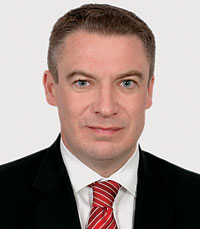
John Gay, Senior Vice President, South Asia-Defence, Rolls-Royce
SP’s ShowNews (SP’s): Can you give a brief background of your company’s association with India?
John Gay (Gay): Rolls-Royce has a long and proud history of partnership with India. In 1932, the company supplied Gipsy engines to power Dragon Rapide DH-89 aircraft operated by the Tata Airlines, the forerunner to Air India, and began a relationship with India that has continued to grow ever since.
Today, there are over 1,300 Rolls-Royce engines in service in India, mainly as a result of long-term defence programmes. However, all four of the company’s global market sectors—civil aerospace, defence aerospace, marine and energy—are well represented. In the defence sector, Rolls-Royce celebrates the 80th anniversary of its partnership with the Indian Air Force in 2013.
However, our activity in India has expanded far beyond the supply of engines. Rolls-Royce has played a key role in the development of India’s indigenous aerospace industry, largely through our partnership with the Hindustan Aeronautics Limited (HAL) in Bengaluru, which is now in its 57th year.
Most recently, we completed construction of a new manufacturing facility in Bengaluru for our International Aerospace Manufacturing Pvt Ltd (IAMPL) joint venture with HAL, which will produce important components for the Trent family of civil engines.
SP’s: What are the activities you are focusing currently and how do you foresee the future of association?
Gay: On the defence side, I think we can offer India a unique combination of experience and innovation that can help to improve the capability of our customers. We have a broad-based portfolio of engines that means that we are able to offer power solutions for the new tanker programme, additional trainer and transport aircraft, the light utility helicopter and unmanned aerial vehicles (UAVs).
We also feel that the technologies and techniques that we have developed in our services business can further improve the capability and through-life cost of our large installed engine fleet here.
SP’s: Would you like to elaborate on any specific plans for the country in the next five to ten years?
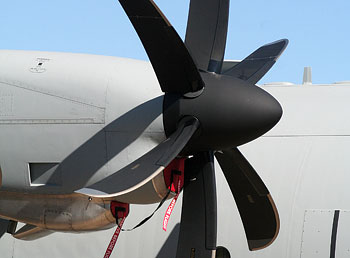
Gay: In terms of new engine sales, we are hopeful that the requirements for additional AE 2100-powered C-130 aircraft and Adour-powered Hawks will be confirmed shortly. The AE 2100 engine is also the powerplant for the C-27J aircraft which is also under consideration by the IAF, and would offer significant commonality benefits if selected alongside the C-130J fleet.
For the tanker programme, the Trent 700 offers real performance benefits for the A330 tanker aircraft that was recently selected for the IAF. It delivers unrivalled operational benefits in the “hot and high” conditions that are part of normal operational requirements in India and is proven to offer significant reductions in life cycle cost for the IAF mission requirements. We were delighted with the performance of the engine during the flight trials for the MRTT where the Trent 700 engine was able to demonstrate its capabilities to the IAF in India. In addition, there are several ongoing helicopter campaigns in which we have a keen interest, including the LHTEC CTS800 as a potential powerplant for the light utility helicopter.
We are also looking to work more closely with the Indian armed forces to enable them to benefit from some of the innovative support techniques that have been proven in other areas of our business, such as marine and civil and which are now being widely adopted by military customers looking to maximise the efficiency and effectiveness of their fleets. This is equally relevant both for new engines as they enter service, or for existing products in service such as the Gnome engine powering the Sea King fleet.
SP’s: What all makes you feel that India is an exciting market?
Gay: India is a cornerstone of our defence business and as I mentioned earlier, we have been partnering with the armed forces and industry here for a very long time. India is undergoing a period of significant infrastructure investment and armed forces modernisation and there is a good synergy between where India wants to go in terms of defence procurement and support and what we are able to offer both in terms of engines and services.
SP’s: What capabilities you plan to showcase during Aero India being held in Bengaluru?
Gay: Aero India gives us a great platform to showcase our technology and products and to meet with a large number of our customers and partners. As our in-service fleets continue to increase we are looking to strengthen our local partnerships to deliver greater levels of support to the benefit of the customers here.
The touch screen technology featuring on our stand will enable visitors to gain a new insight into the capabilities of the portfolio of Rolls-Royce defence engines which power aircraft in all market sectors. In addition, new iPad-based technology will be used to highlight our expansive services capability and offer visiting customers analysis of how initiatives such as fuel management may help to improve operational performance and reduce costs.
In addition, we will be showcasing the Adour Mk871 which powers the Indian AJT and is assembled and tested in India by HAL, and the LHTEC CTS800 helicopter engine which is being offered to power the light utility helicopter.
SP’s: Would you like to refer to any important innovation of your company at this point?
Gay: Innovation is part of our DNA at Rolls-Royce. We invest nearly £1 billion per year on research and technology and we are uniquely placed to leverage that technology across our four business units. That means that our defence customers in India can benefit from engine and services technologies developed in our civil, marine and energy businesses.
We will continue to combine technology, our unique experience of the Indian market, and new local partnerships to deliver further improvements in capability and affordability for our Indian customers.